

Quick Summary
There is no single best age for every woman to claim Social Security. In general, claiming at 62 provides income sooner but permanently reduces your monthly benefit; waiting until your full retirement age provides your standard benefit; and waiting until 70 increases it through delayed retirement credits. At Purposeful Money, I, Erin O'Brien, help women look at this decision in the context of their whole life, not as a stand-alone number.
For women in Naples, Marco Island, Collier County, and throughout Southwest Florida, the right timing often depends on health, family circumstances, work plans, taxes, Medicare, and the retirement life you want to create.
The Three Social Security Claiming Milestones
Social Security lets most people begin retirement benefits as early as age 62. That does not mean 62 is automatically the right answer. It simply marks the first point at which you may be eligible to claim your own retirement benefit.
If you claim before your full retirement age, your monthly benefit is generally permanently reduced. The earlier you claim, the larger the reduction. For someone whose full retirement age is 67, for example, claiming at 62 can reduce the monthly retirement benefit by as much as 30 percent.
Your full retirement age, often called FRA, depends on the year you were born. For people born from 1943 through 1954, FRA is 66. It gradually rises for later birth years: people born in 1955 through 1959 have an FRA between 66 and 67, and people born in 1960 or later have an FRA of 67. Claiming at FRA generally means receiving the full monthly benefit calculated from your earnings record.
The third milestone is age 70. If you wait past full retirement age, Social Security generally adds delayed retirement credits to your benefit until age 70. Those credits increase your monthly amount, typically by 8 percent per full year of delay after FRA. There is no additional delayed-retirement-credit benefit for waiting beyond age 70, so there is usually no reason to postpone filing solely to grow your Social Security check after that point.
Why a Bigger Monthly Benefit Is Not the Whole Story
It is tempting to frame this as a simple question: should I take the smaller check now or wait for a larger one later? But thoughtful Social Security planning is really about your full retirement-income picture.
Your health and family longevity matter. A woman who expects a long retirement may place more value on a larger inflation-adjusted income stream later in life. On the other hand, someone facing serious health concerns or an immediate need for dependable income may weigh an earlier claim differently.
Current work is important, too. If you claim before full retirement age and continue working, the Social Security earnings test can temporarily withhold some benefits if your earnings exceed the annual limit. That rule no longer applies once you reach full retirement age. The details can change, so it is wise to confirm the current limits before making a decision.
I also encourage clients to look at cash flow and other assets. Do you have taxable savings, retirement accounts, pensions, rental income, or part-time earnings that can cover expenses while you delay? Could drawing from certain accounts for a few years create a more sustainable retirement-income plan? The answer is personal, which is why a claiming decision should be part of holistic retirement planning rather than a quick choice made at age 62.
Women Often Have Extra Factors to Consider
For many women, earnings history is not a straight line. Time spent raising children, caring for family members, working part-time, changing careers, or stepping away from paid work can result in lower lifetime earnings and a lower individual Social Security benefit.
That does not mean your options are limited. It means the coordination becomes more important. Married couples may have retirement, spousal, and survivor-benefit considerations. The higher earner’s timing can be especially meaningful because it may influence the survivor benefit available to a surviving spouse.
Divorced women may qualify for benefits on an ex-spouse’s record if the marriage lasted at least 10 years, they are currently unmarried, and other Social Security requirements are met. Widows may have survivor benefit options that involve different timing choices than ordinary retirement benefits. These situations can be nuanced, and filing choices can have lasting consequences.
This is one reason Purposeful Money takes a judgment-free, plain-English approach. You do not need to have every answer before starting the conversation. We can begin with the facts of your life and identify the questions worth exploring.
Remember the Federal Tax Picture
Social Security can be federally taxable depending on your combined income. In simple terms, combined income generally includes your adjusted gross income, tax-exempt interest, and one-half of your Social Security benefits. Depending on your filing status and income, up to 85 percent of your Social Security benefits may be included in taxable income.
That does not mean you pay an 85 percent tax rate on Social Security. It means up to 85 percent of the benefit may be subject to your ordinary federal income-tax rate. The interaction between IRA withdrawals, capital gains, pension income, part-time work, charitable giving, and Social Security can create unexpected tax results.
As an Enrolled Agent and CFP®, I believe retirement tax planning should be coordinated with your income plan. Purposeful Money can help you understand how Social Security may fit alongside a tax-smart withdrawal strategy, including future required minimum distributions. Learn more about our Tax Planning & Preparation
services.
Social Security and Medicare Need Separate Timelines
A very common misunderstanding is that delaying Social Security means delaying Medicare. These are separate decisions. You may delay Social Security past 65 while still enrolling in Medicare on time.
Most people should evaluate Medicare enrollment around age 65. If you are not covered by qualifying active employer health coverage, failing to enroll in Medicare Part B or Part D when first eligible can lead to coverage gaps and potentially lasting late-enrollment penalties. If you are still working and covered through an employer plan, the employer’s size and the details of the coverage matter.
Medicare costs also deserve a place in the conversation. Higher-income beneficiaries may owe an Income-Related Monthly Adjustment Amount, known as IRMAA, on Medicare Part B and Part D premiums. Because IRMAA generally uses tax-return information from two years earlier, a large Roth conversion, capital gain, business sale, or retirement-account distribution can affect future Medicare premiums. That does not automatically make those planning moves wrong, but it does make coordination valuable.
You can explore how these decisions work together through Purposeful Money’s Social Security & Medicare Guidance.
A Season of You™ Decision, Not a Deadline
At Purposeful Money, my Season of You™ philosophy recognizes that retirement is not merely a financial event. It is a life transition. You may be deciding whether to retire, reduce your hours, support a parent, travel more, start a new chapter after loss, or create space for the work and relationships that matter most.
That is why I do not believe in pressure, shame, or one-size-fits-all answers. A sound claiming strategy should reflect your income needs, investments, taxes, insurance, Medicare choices, estate planning coordination, and the legacy you want to leave. It should also make room for the life you want to live now.
Questions to Ask Before You Claim
- What would my monthly benefit be at 62, at my full retirement age, and at 70?
- How would my expected retirement spending be covered if I delayed benefits?
- Am I still working, and could the earnings test affect benefits before FRA?
- What spousal, divorce, or survivor benefits may be available?
- How could my claiming choice affect federal taxes and future Medicare premiums?
- Have I evaluated Medicare enrollment separately from my Social Security filing date?
FAQ
Is age 62 ever the best time to claim Social Security?
It can be appropriate in some circumstances, particularly when income is needed sooner, health is a significant concern, or other resources are limited. The tradeoff is that claiming before full retirement age generally results in a permanently lower monthly benefit.
Is waiting until 70 always best?
No. Waiting until 70 produces the highest monthly retirement benefit available from delayed retirement credits, but it is not automatically the best fit for every person. The years of income you would give up, your health, your cash flow, taxes, and your family situation all matter.
Can I claim Social Security at 70 if I am already on Medicare?
Yes. Medicare and Social Security have separate enrollment timelines. Many people enroll in Medicare around age 65 and delay Social Security until later, but Medicare enrollment should be reviewed carefully based on your health coverage and employment situation.
Can a divorced woman receive Social Security based on her former spouse’s work record?
Possibly. A divorced spouse may be eligible if the marriage lasted at least 10 years, she is currently unmarried, and she meets applicable age and other eligibility rules. The former spouse does not need to have filed for benefits in every situation, but the rules are specific.
Will I owe taxes on my Social Security benefits?
You may, depending on your combined income and tax filing status. Federal tax treatment can be affected by withdrawals from retirement accounts, investment income, pensions, work income, and other sources of income.
Let’s Make the Decision Feel More Manageable
If you are weighing when to claim Social Security, you do not have to sort through every moving piece alone. I invite women in Naples, Marco Island, Collier County, and across Southwest Florida to Schedule Your Learn More Call with Purposeful Money at 800-520-9793
or https://www.purposefulmoney.com/contact. I would be glad to help you bring the questions into focus and explore how this decision fits your Season of You™.
Educational information disclaimer: This article is for general educational purposes only and is not individualized financial, investment, tax, legal, Medicare, or Social Security benefits advice. Rules, benefit amounts, income thresholds, and enrollment requirements can change. Please verify current information with the Social Security Administration, Medicare, the IRS, and qualified professionals before making decisions.
Read More Articles

When Should You Claim Social Security? A Guide for Women in Southwest Florida
Read more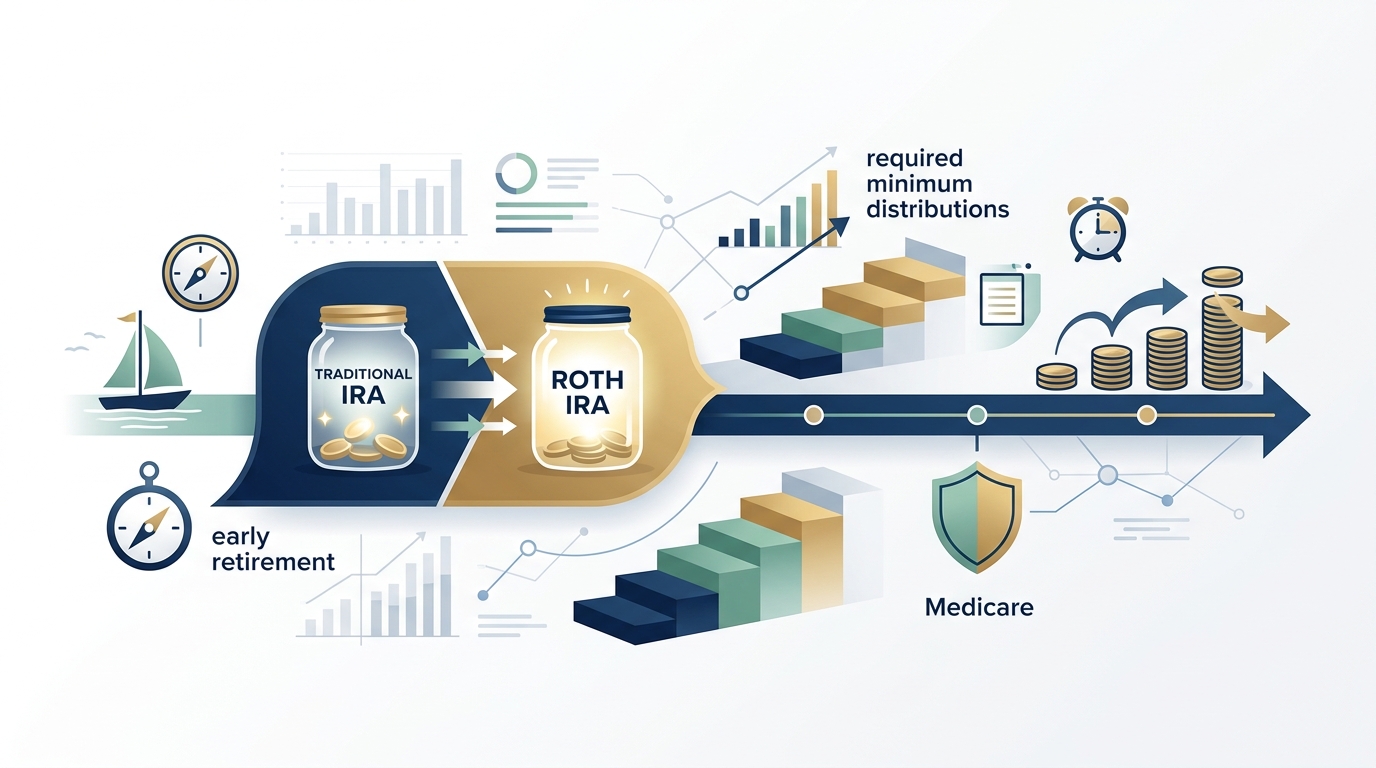
Roth Conversion Strategy in Retirement: When It Makes Sense and When It Doesn't

What Is an Enrolled Agent — and Why Should Your Retirement Advisor Be One?

The Hidden Tax Traps in Retirement — and How to Avoid Them
Read more
The Long Run Retirement Method: A Holistic Approach for Women Navigating Retirement in Southwest Florida
Read more
What the September Fed Meeting Means for Retirement Plans

Why a One-Time Financial Plan Fails Retirees — and What Ongoing Planning Really Requires

What Comprehensive Retirement Planning Really Means for Women in Southwest Florida

Inheritance Planning and Tax-Smart Financial Decisions

Why Fee‑Only Financial Advice Matters for Women Approaching Retirement

How to Know If Your Financial Advisor Is Truly a Fiduciary (A Guide for Women Retiring in Naples & Southwest Florida)

What it means to work with a fee-only fiduciary financial advisor — and why that distinction matters deeply for women approaching retirement

When Claiming Social Security Early Can Actually Help Women Retiring
Read more
5 Common Retirement Planning Mistakes (and How to Avoid Them)

Understanding Accelerated Death Benefit Riders

Maximize Your IRA and HSA Contributions Before Tax Day Arrives

Understanding Long-Term Care Riders in Your Life Insurance Plan

Retirement Planning Strategies for Adults Managing Student Loans

A Fresh Start for Your Finances: Your January Guide to Building Financial Wellness

December 2025 Market Recap: A Year’s Final Turn

Turkey Talk: 5 Financial Questions Advisors Often Hear

What's in my wallet?

Exploring Major Types of Investment Vehicles

5 Key Economic Terms Simplified for Your Financial Insight

Back-to-School Money Moves: A Financial Game Plan

Check In with Your 2025 Financial Plans Mid-Year

A Grain of SALT in the Big Beautiful Bill

Big Beautiful Bill- What's in it for Who?

Exploring Life Insurance: A Key to Financial Literacy
Navigating Risk Tolerance for Investment Success
Read more
Simplify Annuity Choices for Your Financial Future

Take Charge of Financial Wellness Month 2025

Understanding Adjustable-Rate Mortgages in a Changing Market

Exploring Charitable Giving Options: Maximize Impact and Benefits
Read more